

International Science and Geopolitics
Technological and geopolitical shifts have brought challenges to the enterprise of international science. How are research teams, universities, and countries responding? How ought they respond?
Events, commentaries, and media mentions
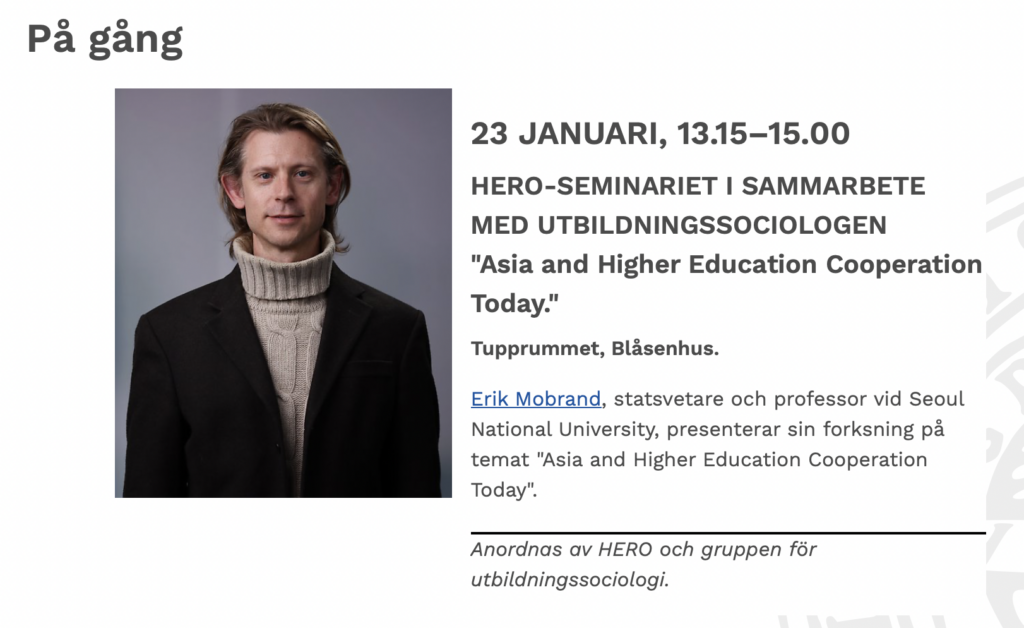
- Seminar on “Asia and Higher Education Cooperation Today,” Uppsala University, 23 January 2026.
- Mention in Dagens industri 8 January 2026.
- Panel participation in event, “Strategic Business Analysis in a Changing World,” Stockholm, 17 December 2025.
- Presentation on “Geopolitical Borders and Open Science,” LU Open Science Days 2024, Lund, 20 Nov. 2024.
- Asian universities may struggle to be successful in Horizon Europe, Times Higher Education 18 July 2024.
- What South Korea’s Horizon Europe Entry Says About Its Science and Tech Ambitions, The Diplomat 6 June 2024.
- 한국의 ‘호라이즌 유럽’ 가입은 축복이다 The Hankyoreh 23 May 2024.
- International science is having a messy breakup, Research Europe 7 March 2024.
- “South Korea’s Responses to Geopolitical Challenges to International Scientific Collaboration,” Technology Forecasting and Social Change Special Conferece, Hsinchu, Taiwan, 28-30 Oct 2023.
Academic publications
Kim, Mobrand, & Schwaag Serger (2025). National context and the security turn in international research collaboration: evidence from South Korea. Globalisation, Societies & Education.
Abstract: The security turn in research collaboration and exchange in higher education has prompted policy debates over the future of global science. More can be learned about this security turn by examining a society in which national security concerns have appeared relatively rarely in policy discussions about international research collaboration. South Korea’s example demonstrates the significance of national context in shaping the extent to which security frames policy on international research collaboration.
Kim & Mobrand (2025). International science as national project: lessons from South Korea for the future of international research collaboration. Studies in Higher Education.
Abstract: Geopolitical challenges and technological shifts have made researchers and research institutions think more carefully about international collaboration, which is now portrayed as a potential liability. Against this background, this essay examines the way that national context shapes international science collaboration through the study of a single country.
about the project
The International Science and Geopolitics project is funded by the Marianne and Marcus Wallenberg Foundation as well as Vinnova and based at Lund University.
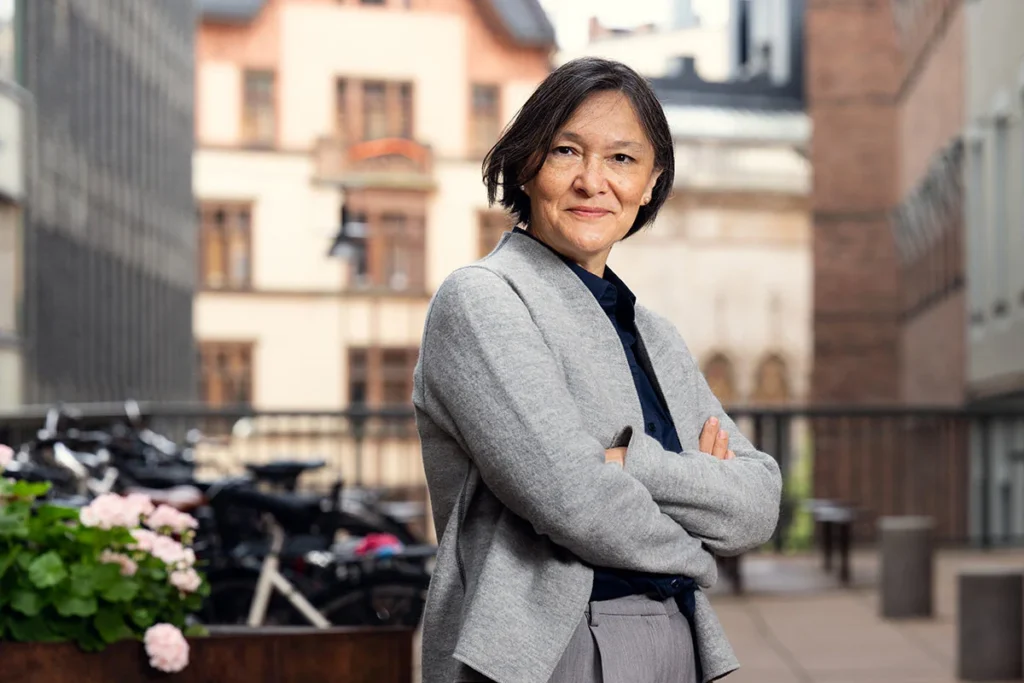
Sylvia Schwaag Serger
Sylvia is the project’s principal investigator and an authority on research policy.


Hyejin Kim brings specialization in international education, business, and the Asian region.
Erik Mobrand studies politics, society, and international science with a focus on Asia.